
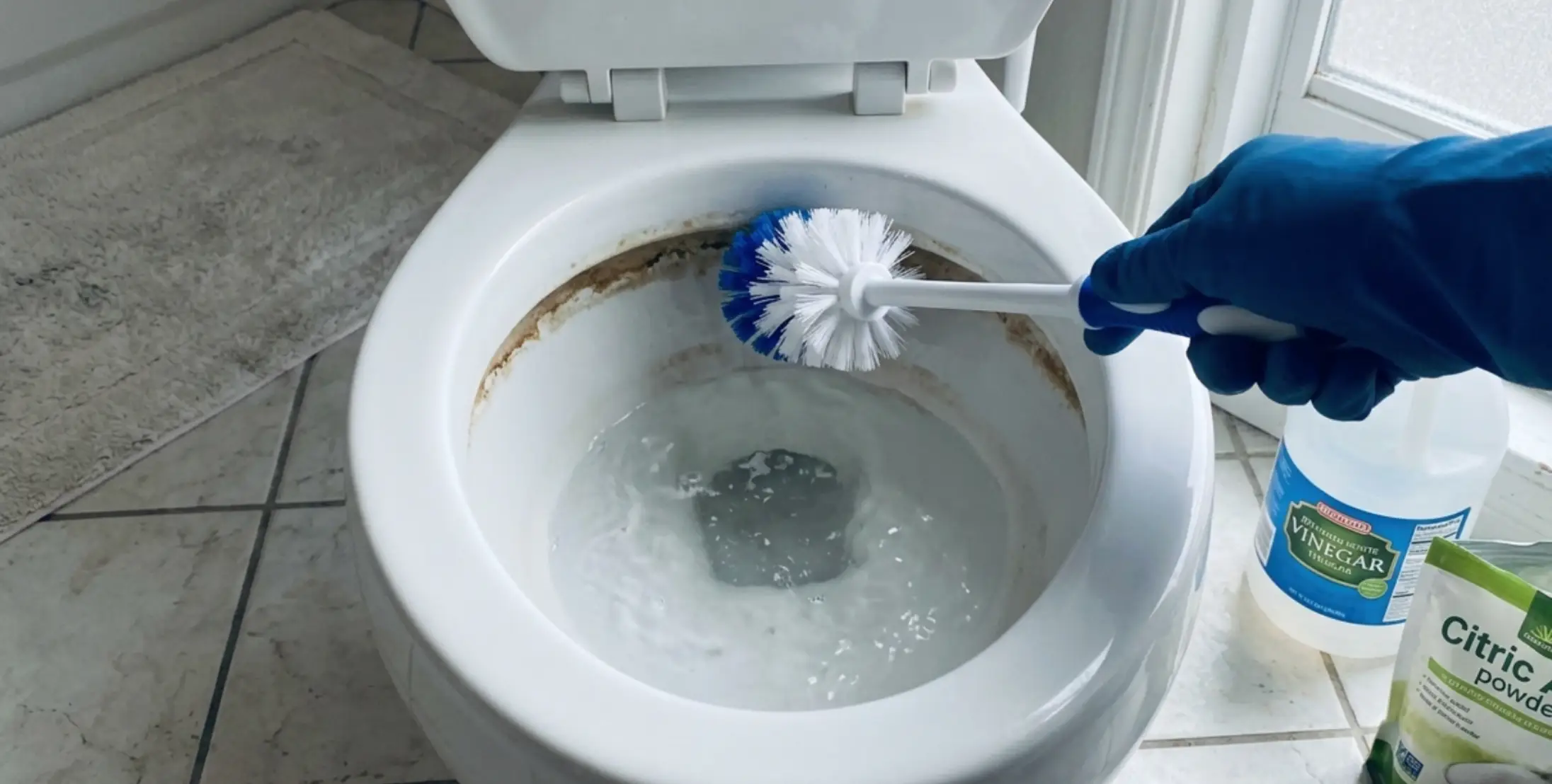
What limescale actually is (and why toilets get it worst)
Limescale is calcium carbonate — a hard, chalky mineral deposit that forms when water containing dissolved calcium and magnesium evaporates or sits on a surface for long periods. It's the same substance that builds up in kettles, on shower screens, and around tap bases. In a toilet, the conditions are perfect for it.
The water in your toilet bowl sits permanently. It doesn't drain between uses — it just gets replaced. Every flush introduces fresh mineral-laden water that sits against the porcelain for hours. The minerals slowly deposit on the bowl surface, building up layer by layer into the hard, yellowish-brown crust that's so difficult to shift with regular cleaning.
The areas most affected are predictable: the waterline (where evaporation is highest), under the rim (where flush water enters but air circulation is poor), and the bottom of the bowl where standing water concentrates minerals as it slowly evaporates between flushes.
In London, this process is dramatically accelerated. Thames Water's supply is classified as very hard — typically 200–350 parts per million of calcium carbonate depending on your postcode. A toilet in a London flat will develop visible limescale within weeks of being installed if left untreated. In soft water areas like Scotland or Wales, the same toilet might stay clean for months.
Limescale itself isn't a health hazard — calcium carbonate is inert and non-toxic. But the rough, porous surface it creates is an ideal breeding ground for bacteria, and it traps organic matter that causes discolouration and odour. A limescale-free toilet isn't just about appearance; it's meaningfully easier to keep hygienic.
The under-rim problem
The most neglected area in any toilet is under the rim. The flush jets — small holes or a continuous channel that distributes water when you flush — are hidden from view and almost impossible to clean with a standard toilet brush. Limescale builds up inside these jets over time, reducing flush pressure and creating dark deposits that are visible only if you crouch down and look up under the rim with a mirror.
This is one of the most common issues we encounter during end of tenancy cleaning — tenants clean the visible bowl but never address the rim jets, and the checkout inspector flags it immediately. If you're moving out of a London rental, under-rim limescale is worth addressing specifically. We'll cover how in the methods below.
White vinegar method
White vinegar is the simplest and cheapest starting point. Acetic acid dissolves calcium carbonate on contact — slowly at low concentrations, but effectively given enough time.
For the bowl: pour 500ml–1 litre of undiluted white vinegar directly into the bowl, making sure it covers the waterline stain. The water level will rise — that's fine. Leave it for a minimum of 4 hours, or ideally overnight. The longer the acid is in contact with the limescale, the more it dissolves. In the morning, scrub with a stiff toilet brush, paying particular attention to the waterline and any visible deposits. Flush to rinse.
For under the rim: soak paper towels or toilet paper in white vinegar and press them up under the rim so they stay in contact with the limescale around the flush jets. Leave for 2–3 hours (the paper holds the vinegar against the surface instead of letting it run straight into the bowl). Remove, scrub under the rim with an old toothbrush or a small bottle brush, and flush.
Vinegar works well for light to moderate limescale — the kind that's been building for a few weeks to a couple of months. For heavy, years-old deposits, you'll likely need something stronger. The main downside is the smell, which is pungent but harmless and dissipates quickly after flushing.
Standard supermarket white vinegar is 5% acetic acid. For stubborn toilet limescale, look for "cleaning vinegar" or "spirit vinegar" at 10% concentration from hardware stores — roughly twice as effective for the same soak time. Never use malt or coloured vinegars; they'll stain.
Citric acid method
Citric acid powder is more effective than vinegar per gram, has almost no smell, and is cheap in bulk. A 1kg bag costs £5–8 and will last for months of regular toilet maintenance.
Dissolve 3–4 heaped tablespoons of citric acid powder in a jug of warm water and pour it into the toilet bowl. Alternatively, you can sprinkle the powder directly onto wet limescale deposits above the waterline — it fizzes on contact and clings to the surface better than a liquid solution.
Leave for 2–4 hours, or overnight for heavy buildup. Scrub with a toilet brush, then flush. For under-rim deposits, make a thick paste (citric acid powder mixed with just enough water to form a spreadable consistency) and apply it directly under the rim with a gloved hand or old toothbrush. Leave for an hour, scrub, flush.
Citric acid is food-grade and non-toxic — it's the same compound found in lemons. It's safe for all standard toilet materials including porcelain, ceramic, and plastic cistern components. This is the same active ingredient in most commercial descaling tablets, just without the markup.
Specialist toilet limescale removers
When vinegar and citric acid aren't cutting through heavy buildup, commercial limescale removers are the next step. Products like Harpic Power Plus, Domestos Zero Limescale, and HG Professional Limescale Remover (the blue bottle) are formulated with stronger acids — typically hydrochloric acid at concentrations between 5–15% — that dissolve even thick, years-old limescale deposits.
These products work significantly faster than household acids. Apply under the rim and around the waterline, leave for 15–30 minutes (follow the product label), scrub, and flush. Most will shift heavy limescale in a single application where vinegar would need multiple overnight soaks.
The trade-off is that these are genuinely harsh chemicals. Hydrochloric acid will damage skin on contact, and the fumes are irritating to eyes and respiratory passages. Always wear rubber gloves, ensure the bathroom is well ventilated (open a window or run the extractor), and never mix these products with bleach or any other cleaning product — the chemical reaction produces toxic chlorine gas.
For routine maintenance, household acids (vinegar, citric acid) are safer and perfectly adequate. Save the specialist products for quarterly deep descales or for tackling inherited limescale when you move into a new property.
Hydrochloric acid (found in most commercial limescale removers) reacts with sodium hypochlorite (bleach) to produce chlorine gas, which is toxic and potentially lethal in an enclosed bathroom. If you've used bleach in the toilet, flush several times and wait at least 30 minutes before applying any acid-based limescale remover.
Pumice stone method
A wet pumice stone is one of the most effective physical methods for removing stubborn limescale from a porcelain toilet bowl. Pumice is softer than porcelain but harder than limescale — so when used wet, it abrades the mineral deposit without scratching the glazed surface underneath.
The technique is simple: wet both the pumice stone and the toilet surface thoroughly (never use pumice dry — it will scratch), then rub the limescale deposits with moderate pressure. The limescale crumbles away as a paste, which you can flush. This is particularly effective for thick waterline buildup that chemical soaks haven't fully dissolved.
Two important caveats. First, this only works on glazed porcelain or vitreous china — the standard material for toilet bowls. Do not use pumice on coloured, patterned, or plastic toilet surfaces, as it will scratch and damage the finish. Second, even on porcelain, if the glaze is already damaged or worn (common in very old toilets), pumice can make things worse by roughening the exposed ceramic, which then attracts more limescale. Test on a small area first.
Pumice stones designed specifically for toilet cleaning (sometimes called "toilet stones" or "limescale erasers") are available from most hardware stores and Amazon for £3–5. They're shaped for bowl use and last through dozens of cleaning sessions.
Methods to avoid
Not everything recommended online is a good idea. A few common suggestions are either ineffective or actively counterproductive.
**Coca-Cola** contains phosphoric acid, which does dissolve limescale to a degree. But the concentration is very low (Coke is about 0.05% phosphoric acid — compare that to even vinegar at 5% acetic acid). It also contains sugar, caramel colouring, and other compounds that leave sticky residue in the bowl and potentially stain the porcelain. It's a parlour trick that's far less effective than a 50p bottle of vinegar. Skip it.
**Baking soda (bicarbonate of soda)** is a base, not an acid. It cannot dissolve limescale. Some guides recommend it in combination with vinegar — the dramatic fizzing looks like it's doing something, but the acid-base reaction actually neutralises both ingredients, making the mixture less effective than using vinegar alone. Baking soda is useful for deodorising and for mild abrasive scrubbing, but it's not a descaler.
**Wire brushes, steel wool, and abrasive scourers** will absolutely remove limescale — along with the toilet's glaze. Once the glaze is scratched, the rough surface beneath it attracts limescale far faster than before, creating a cycle of worsening buildup. Use only soft toilet brushes, pumice stones (wet), or nylon-bristle brushes.
**Bleach** is a sanitiser, not a descaler. Bleach will kill bacteria and lighten stains, but it does not dissolve limescale. In fact, if you bleach over limescale, you're sanitising the surface of the deposit without removing it — and the limescale continues to grow underneath. Descale first, then sanitise if needed.
Waterline and cistern limescale
The waterline ring — a hard brown or grey band around the bowl at standing water level — is the most visible limescale deposit and often the hardest to remove because it's been accumulating continuously since the toilet was installed.
The most effective approach is a combination: first, reduce the water level in the bowl by turning off the isolation valve (usually behind the toilet, near the floor) and flushing to empty most of the water. This exposes the waterline deposits so you can apply treatment directly rather than through standing water. Apply citric acid paste or a specialist limescale remover directly to the exposed ring, leave for 1–2 hours, scrub with a pumice stone or stiff brush, then turn the water back on and flush.
Cistern limescale is less visible but can cause problems. Mineral deposits build up on the flush valve, the fill valve, and inside the overflow pipe. Over time this can cause a constantly running toilet, weak flushes, or a cistern that fills slowly. To clean it, turn off the water supply, flush to empty the cistern, then pour a citric acid solution (4–5 tablespoons in warm water) into the empty cistern. Let it sit for a few hours, scrub any accessible components, turn the water back on, and flush several times.
If your toilet is running constantly or filling very slowly and descaling the cistern doesn't fix it, the internal components may need replacing — this is a plumber's job rather than a cleaning task.
How to prevent limescale buildup
You can't stop limescale entirely in a hard water area — every flush introduces fresh mineral-laden water. But you can dramatically slow the buildup with consistent habits.
**Weekly acid treatment.** Once a week, pour a cup of white vinegar or a tablespoon of citric acid dissolved in warm water into the bowl before bed. Let it sit overnight, brush in the morning, flush. This takes 30 seconds of effort and prevents the gradual mineral buildup that turns into a major cleaning job later.
**Don't rely on bleach for regular cleaning.** As mentioned above, bleach doesn't descale — it just masks the problem. If you bleach your toilet weekly but never descale it, you'll end up with a toilet that smells clean but has thick limescale deposits hidden under a bleached surface. Alternate between an acid-based treatment (for limescale) and a bleach-based treatment (for sanitising) on different weeks.
**In-cistern tablets and rim blocks.** These slow-release products sit in the cistern or clip under the rim and release a small amount of acid or surfactant with every flush. They won't remove existing limescale, but they help prevent new buildup between manual cleans. Look for citric acid–based tablets rather than just fragranced blue dye blocks, which do very little for actual limescale.
**Brush under the rim.** Every time you clean the toilet, angle the brush up under the rim and scrub around the full circumference. This dislodges early mineral deposits before they harden. A dedicated under-rim brush (angled or curved head) makes this significantly easier than a standard straight toilet brush.
When to call a professional
Most toilet limescale is manageable with the methods above. But there are situations where professional cleaning is the better option.
If you're moving out of a rental and the toilet has heavy limescale staining, it's one of the first things a checkout inspector will flag — and one of the most common deposit deductions for bathrooms. Our end of tenancy cleaning includes professional descaling of all bathroom fittings (toilets, baths, basins, taps, shower screens) as standard, and comes with a 48-hour re-clean guarantee if the agent flags any issues.
If a property hasn't been deep cleaned in years and the toilet limescale is thick enough that home methods aren't making a dent after multiple applications, professional-grade products and equipment (including hydrochloric acid at higher concentrations than consumer products) can restore it in a single visit. This is part of what we cover in a deep cleaning job across London.
And if the toilet bowl's glaze has been damaged by years of limescale or abrasive cleaning, no amount of descaling will restore it to a smooth, stain-resistant finish. At that point, replacing the toilet is more practical than continuing to fight a losing battle. A plumber can fit a new toilet for £150–300 including labour — often less than the cumulative cost and effort of repeated failed cleaning attempts on a damaged bowl.
Related services
End of Tenancy Cleaning
Moving out? Toilet limescale is one of the most common deposit deductions. Our EOT clean descales all bathroom fittings to checkout standard.
View serviceDeep Cleaning
Professional limescale removal across your entire bathroom — toilet, bath, basin, taps, shower screen, and tile grout.
View serviceOur Guarantee
Every end of tenancy clean includes a 48-hour re-clean guarantee. If the agent flags limescale or other issues, we come back free of charge.
View serviceFrequently asked questions
A weekly acid treatment (vinegar or citric acid overnight) prevents buildup. For a more thorough descale — scrubbing the waterline, treating under the rim — once a month is a good cadence for London's hard water.
Acid-based limescale removers (vinegar, citric acid, commercial products) are safe for standard porcelain and vitreous china toilets. Avoid using them on coloured, patterned, or plastic surfaces without checking the product label first.
Bleach (sodium hypochlorite) is an oxidising agent — it kills bacteria and lightens organic stains. But limescale is an inorganic mineral deposit (calcium carbonate) that requires an acid to dissolve. Bleach can't do this. It may whiten the surface of the limescale temporarily, but the deposit remains.
Brown or rust-coloured stains in the bowl are usually limescale combined with iron deposits from the water supply or old pipes. The removal method is the same — acid-based treatments dissolve both calcium and iron mineral deposits. If the stain is only below the waterline, it's almost certainly mineral buildup.
Yes, as long as both the pumice and the toilet surface are wet. Pumice is softer than glazed porcelain and will abrade the limescale without scratching the glaze. Never use pumice dry, and don't use it on coloured, patterned, or plastic toilet surfaces.
Soak paper towels in white vinegar and press them up under the rim so the acid stays in contact with the deposits. Leave for 2–3 hours, then scrub with an old toothbrush or angled toilet brush. For heavy buildup, use citric acid paste or a specialist limescale remover applied directly under the rim.
Technically yes, but it's extremely weak. Coke contains about 0.05% phosphoric acid — far less effective than vinegar at 5% or citric acid. It also leaves sugar and colouring residue in the bowl. A bottle of white vinegar costs less and works far better.
In London's hard water, limescale will always return — you can only slow it down. A weekly overnight vinegar or citric acid soak, regular under-rim brushing, and in-cistern descaling tablets are the most effective preventive combination. If you're not willing to maintain that routine, a quarterly deep descale will keep it manageable.